
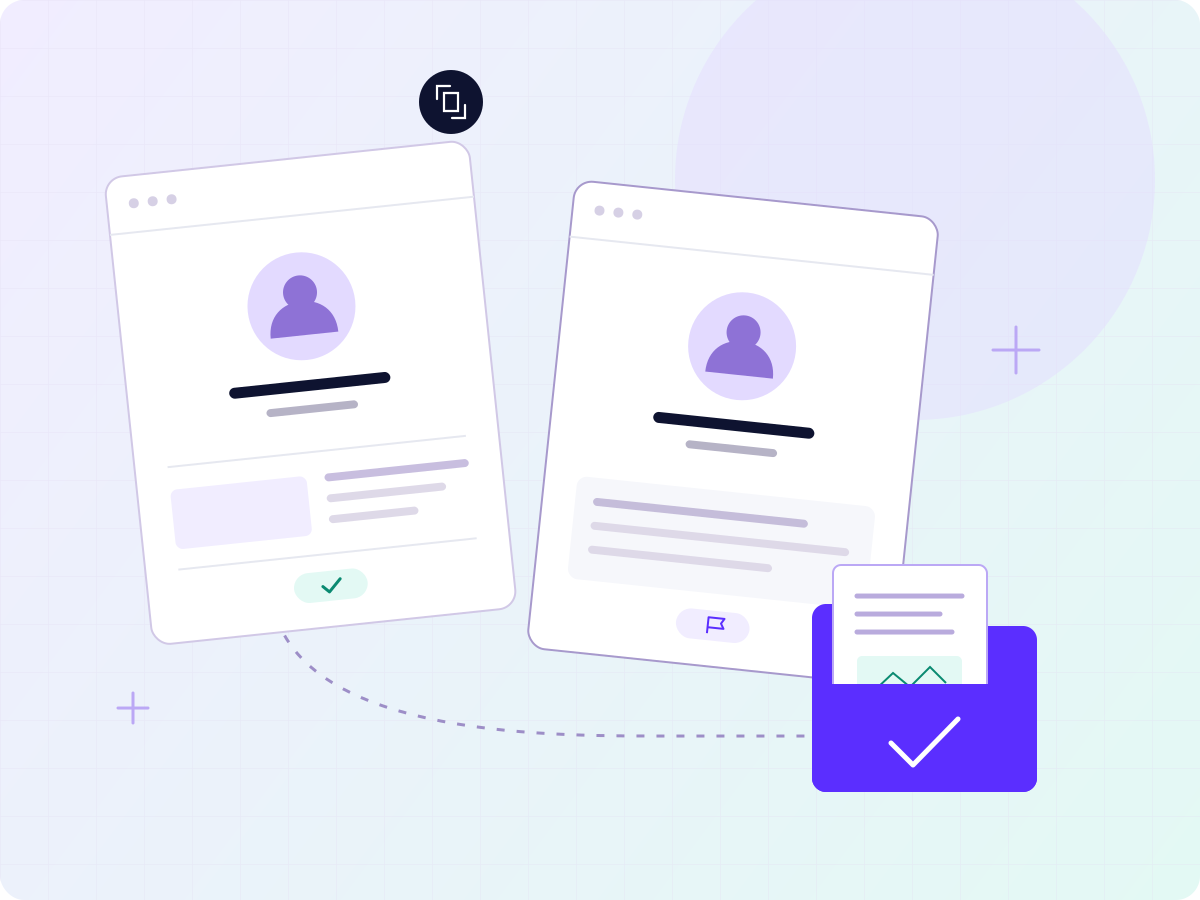
A friend sends you a profile with your photo, your name and a message you never wrote. Before you confront the account or start filling every report form you can find, make a small, organized record of what is happening.
A useful impersonation report explains three things: who is being represented, which account is doing it, and what makes the representation misleading. This guide helps you prepare that explanation, protect your information and find the relevant platform route. Reporting starts a review; it does not promise a particular decision or removal deadline.
1. Start with the risk, not the report button
First, check whether this is a copied profile or a takeover of your real account. If messages are coming from your actual account and you cannot control it, use the platform's account-recovery process as well. Reporting a separate impersonator will not restore access to a compromised account. Facebook's account-recovery guidance distinguishes hacked accounts from impostor accounts.
Tell anyone who may be targeted through a contact channel you already trust. Keep the warning factual: identify your genuine account, say that another account is not yours, and ask people not to send it money or personal information. Avoid resharing the impersonator's messages to a wider audience unless there is a clear reason to do so.
If money has already changed hands, contact the relevant bank or payment provider promptly through its official contact details. A platform report is a separate task from trying to recover a payment. The US Federal Trade Commission's scam-response guide explains steps for different payment methods and exposed information. Outside the US, use the appropriate local fraud-reporting and consumer-protection channels. For an immediate threat to someone's safety, seek local emergency assistance.
2. Identify what the account is actually doing
A matching name or reused picture alone may not explain the whole problem. Look at the username, biography, links, posts and messages together. Is the account claiming to be you, speaking for your business, accepting bookings in your name, or asking people to pay it? Those details make the report more useful than simply saying, “This account is fake.”
Different issues may need different reporting routes:
- Impersonation: the account misleadingly represents your identity or affiliation.
- Account compromise: somebody controls your genuine account.
- Copyright: a report concerns unauthorized use of work whose rights you own or are authorized to enforce. See, for example, YouTube's copyright-removal requirements.
- Privacy or abuse: specific content exposes personal information, threatens someone or otherwise causes a separate harm.
Do not assume that appearing in a photo establishes who owns its copyright. If you are unsure about the rights, investigate that question before making a copyright claim. Describe each problem accurately instead of choosing a more serious category because you hope it will receive attention faster.
Also consider whether an account is clearly presented as commentary, satire or fandom. Reddit's impersonation policy, for example, distinguishes deceptive representation from participation under a pseudonym and clearly disclosed fan or commentary accounts. Explain the misleading conduct you observed rather than treating anonymity itself as wrongdoing.
3. Preserve a useful record before the account changes
Keep a small evidence folder. Start with the complete profile URL and the exact username, including punctuation. Then capture the page as you see it, with enough surrounding context to show which account it is. Record when you captured it and the timezone you used. This helps distinguish an earlier version of a profile from a later edit.
Your evidence checklist
- The reported profile or channel URL and exact handle.
- Your genuine account or official website, where relevant.
- Screenshots of the copied identity and misleading claims.
- Direct URLs to relevant posts, videos or other content.
- Relevant messages that you or a consenting recipient can access.
- A dated note explaining what each item shows.
- Any report receipt, reference number or platform response.
Keep the original capture and make a separate copy if you need to crop or redact it for sharing. Do not alter the original in a way that changes its meaning. A screenshot with no visible account context can be difficult to interpret; pair it with the corresponding URL and a short explanation.
Collect only what is relevant and available to you legitimately. Do not try to break into the account, obtain someone else's private messages without permission, or persuade a stranger to send identity documents. Keep unrelated contacts and financial details out of an evidence package.
If the account has blocked you, ask a trusted person who can view it to preserve the public URL and relevant context. Do not create deceptive accounts or contact the impersonator simply to provoke a response. If you cannot safely collect something, explain that limitation in the report.
4. Write a short explanation a reviewer can follow
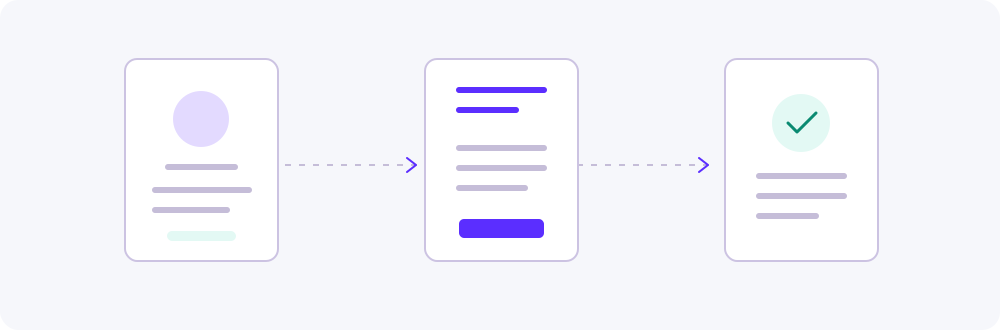
Lead with the two accounts and the specific deception. Then connect each supporting item to that explanation. A clear report can be brief without leaving the reviewer to guess why a copied name or image matters.
Illustrative wording, not a case record
“This profile is presenting itself as my business and accepting appointment requests. My genuine profile is linked from our official website. The reported account has copied our photograph and biography, and its messages direct customers to an unrelated payment account. I have attached the profile URL and relevant screenshots.”
Adapt that structure to what you can actually establish. Include your relationship to the person or business if you are reporting on their behalf. Do not claim to be a lawyer, an employee, a rights holder or an authorized representative unless that description is true.
Some reporting processes ask for proof of identity or authority. Read the request carefully and provide only what the official process requires. Open the help page through the platform's own app or a verified official domain. Do not send passwords, recovery codes or identity files to an account that contacts you claiming it can guarantee removal.
5. Use the route for the relevant platform
Reporting interfaces can change by device, country and account status. The links below are starting points in the platforms' own help centres. Follow the current prompts rather than relying on an old screenshot of a form. A report for one platform does not automatically address copies elsewhere.
Instagram and Facebook
Start with Instagram's impersonation help page or Facebook's impersonation help page. If a page redirects to sign-in or is unavailable in your browser, open Help inside the official app and search for reporting an account pretending to be someone else. Use the reported profile's full URL, and distinguish a personal profile from a business Page.
Meta's detailed impersonation pages could not be fully retrieved during this article's source check. We therefore do not reproduce a fixed sequence of buttons or claim that a particular document is always required. Read the current instructions before submitting sensitive information.
TikTok
TikTok's account-reporting help page includes guidance for impersonating accounts. Check the options shown for your location and whether you are reporting for yourself or someone else. The indexed official guidance was available during research, but the full live page could not be retrieved. We have not assumed that one form or identification process applies everywhere.
X
X's impersonation guidance provides a Help Center route for the person or brand being impersonated, or an authorized representative. It also describes reporting from a profile as a bystander and says that an X account is not required to submit an impersonation report. X reviews whether its rules have been violated; an outcome may involve suspension or a required account change. Do not equate a report with a promise to receive the username.
Read Reddit's impersonation policy alongside its user-reporting instructions. Identify the relevant profile and, where applicable, the posts or messages that demonstrate misleading representation. Reddit considers profile details and activity together. Reporting only to a community's moderators is different from making a platform-level report to Reddit.
YouTube
YouTube's impersonation policy covers misleading representation of a person, entity or channel. It directs people to report an impersonating channel and identifies privacy reporting as a separate option for certain uses of personal information or likeness. Include the channel URL and relevant video links. A single video report may not explain the broader way a channel presents itself.
6. Follow up with information, not volume
Save the confirmation and the exact URLs you submitted. Note the date, category and explanation you used. If the platform provides a reference number, keep it with the evidence instead of relying on a notification you might lose.
When a response arrives, read what it actually addresses. It may concern one post rather than the entire account. If a review or appeal option is offered, explain the specific point that was missed and attach relevant new information. A general expression of frustration gives a reviewer less to work with than a clear account of the remaining deception.
Avoid buying reports or repeatedly sending identical complaints. X's authenticity policy expressly addresses misuse of reporting features, including large numbers of duplicate or false reports. More submissions are not evidence that the underlying claim is stronger.
There is no universal platform deadline that this guide can promise. If a form or response states a timeframe, record that specific instruction. For ongoing financial harm, threats or other urgent circumstances, consider the appropriate professional, payment-provider or public-authority route alongside the platform report.
7. Make the genuine account easier to recognize
Link to your real social profiles from a website or other channel you control. Give customers one clear place to check where you accept bookings, payments or support requests. You do not need to publish more private information to establish that reference point.
For repeat incidents, keep a simple list of account URLs, discovery dates, reporting dates and outcomes. Treat each new account as a new item: a previous removal does not identify a newly created profile automatically. Review what is still accessible before describing a matter as resolved.
If you need help organizing evidence and reporting routes, Afnihi's impersonation service works under written authorization. You can start a private request for an initial assessment. The service process explains scope, authorization and payment. Platforms make their own decisions; any paid-work promise belongs in your agreed terms, not in a general article.
Common questions
Can I report an account if I am not on that platform?
Check the platform's current help route. X explicitly permits impersonation reporting without an X account. Do not assume that every other service uses the same process or accepts the same kind of representative.
Should I block the account immediately?
Prioritize your safety. If you can safely preserve the account URL and relevant context first, that may help your record. You do not need to keep receiving abusive messages just to maintain evidence. Blocking and reporting serve different purposes.
Does copying my profile picture guarantee removal?
No. Explain how the identity or affiliation is being misrepresented, and select the relevant policy route. The platform assesses the report against its rules. Another reporting category may be appropriate for separate misuse of content or personal information.
Can someone submit the report for me?
Some platforms accept authorized representatives, while other flows have different requirements. Confirm the current instructions and document the representative's authority. Never hand over an account password or authentication code as a substitute for authorization.
Sources and review notes
Source check: 15 October 2026. This guide is general reporting information, not an assessment of a particular legal claim. The primary references are linked beside the statements they support. The evidence checklist, example wording and organizational suggestions are Afnihi's editorial guidance, not quotations or guaranteed platform requirements.
X, Reddit, YouTube and FTC guidance were directly readable during research. The Meta impersonation links redirected or limited access, and TikTok's full page was unavailable to the research tool; those access limits are stated in the relevant sections. Platform interfaces and policies can change. Use their current official instructions at the time you report.